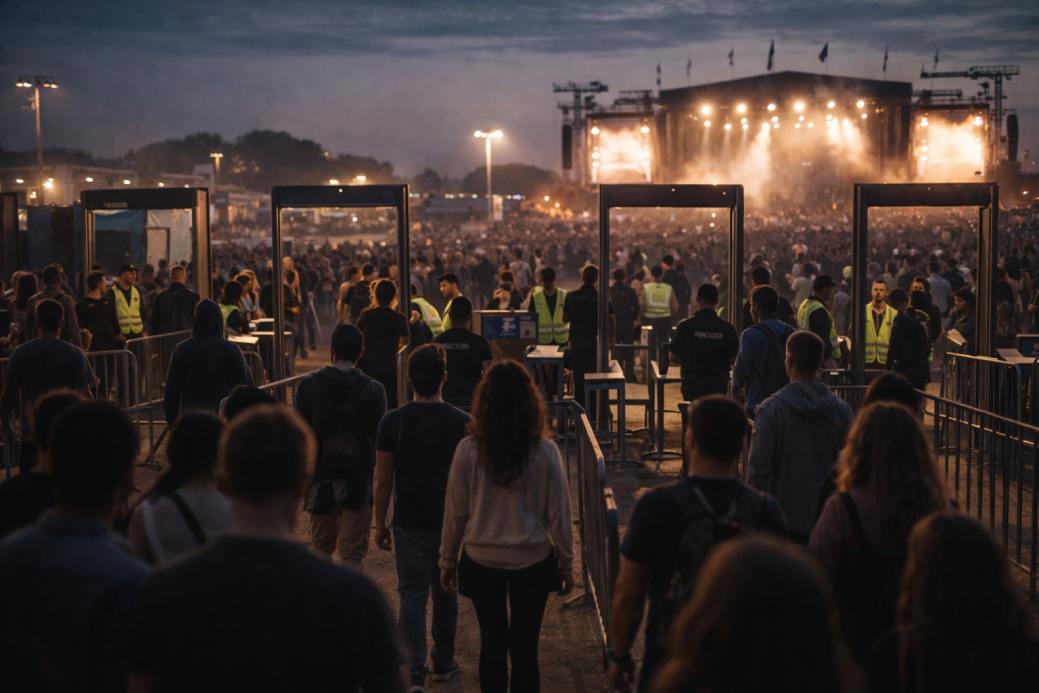
Live Nation is requiring proof of full vaccination or a recent negative Covid-19 test for entry at all of its owned-and-operated venues and festivals, effective October 4, where permitted by law. The policy covers both fans and staff.
The decision comes as the Delta variant continues to drive a surge in cases across the United States, just as concerts and large-scale live events have begun reopening in earnest after more than a year of shutdowns. With tens of thousands of fans returning to amphitheaters, arenas, and festival grounds, the company is moving to establish a baseline health standard that it says will help keep those events running.
What the mandate requires, when it kicks in, how Live Nation is publicly framing the move, and what it could mean for the broader live-events business — those are the questions this article addresses. The policy marks one of the most sweeping Covid-entry requirements yet adopted by a single company in the concert industry, and its rollout is being watched closely by rivals, artists, and public health officials alike.
What Live Nation’s Mandate Requires and When It Takes Effect
Starting October 4, Live Nation will require all fans, employees, and crew at its owned and operated venues and festivals in the United States to show proof of full Covid-19 vaccination or a negative test taken within 72 hours of the event. The policy applies where permitted by law.
The rule covers Live Nation’s own properties — amphitheaters, clubs, and festivals it directly controls — rather than every event the company promotes through third-party venues. Concertgoers and staff face the same standard: no exemptions based on role or ticket tier.
Verification will happen at entry. Live Nation has not specified a single approved app or document format, leaving room for physical vaccination cards and digital records alike. A negative PCR or antigen test dated within 72 hours satisfies the testing option for those who are unvaccinated or prefer not to disclose their status.
The company framed the mandate as the baseline needed to keep shows running as the Delta variant drives renewed pressure on the live-events industry.
Why the Company Is Making the Change Now
Live Nation executives have framed the mandate squarely around protecting the recovery of live entertainment. “We want to get back to doing what we love — and this policy is how we keep that going,” president and CEO Michael Rapino said in a statement announcing the new requirements. The company has been explicit: the goal is to keep venues open and avoid the kind of last-minute cancellations that gutted the industry in 2020 and 2021.
The timing is tied directly to the Delta variant’s rapid spread across the United States. Case counts climbed sharply through the summer of 2021, putting pressure on promoters, venues, and artists to demonstrate that large gatherings could be managed safely. Several major festivals faced public backlash and artist withdrawals over perceived lax protocols, intensifying scrutiny on the entire sector.
Live Nation reported that ticket demand for the fall 2021 season was tracking near pre-pandemic levels, making the stakes unusually high. A single high-profile outbreak could undermine audience confidence at exactly the moment the company needed it most.
What the Policy Means for Concertgoers and the Broader Live-Events Industry
Fans attending Live Nation shows should expect to present proof of full vaccination or a negative Covid test at the door. The company is urging ticketholders to check venue-specific requirements before arriving, since local laws and venue agreements may shape exactly how the policy is enforced at any given event.
The practical friction is real. Concertgoers who haven’t organized their documentation could face delays or be turned away entirely. That puts pressure on audiences to prepare in advance—something most casual fans aren’t accustomed to doing.
The ripple effects may extend well beyond Live Nation’s own properties. When the world’s largest concert promoter moves, smaller venues, rival promoters, and independent festivals face a choice: align with the new standard or risk looking indifferent to public health at a moment when scrutiny is high.
What remains unsettled is how durable these rules will be. Policies tied to public health conditions can shift quickly, and legal challenges in some states add further unpredictability. Still, the announcement signals that major live events are no longer treating safety requirements as optional.